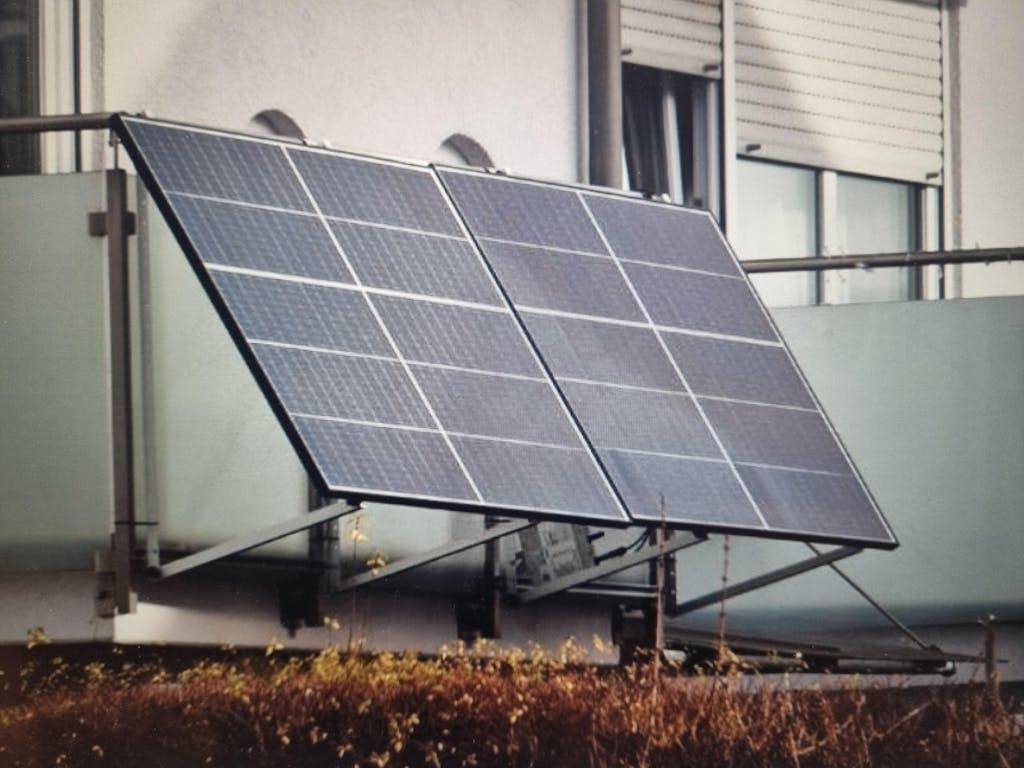
"Harnessing the power of the sun: Demystifying the structure of a photovoltaic system"
In times of energy transition, the switch to clean and sustainable energy sources is more important than ever. Among the various available renewable energy options, solar energy stands out as a particularly affordable , reliable, and environmentally friendly choice. Photovoltaic (PV) systems are very popular due to their simple design. In this blog post, we delve into the construction of a photovoltaic system and explain its basic structure as well as the function of its individual components.
Basic structure
PV systems are basically built in the following order:
A) Administrative part:
-
Applying for a metering point – Apply for a feed-in metering point with the grid operator (e.g., Netz Oberösterreich, Linz Netz, Netz NÖ, etc.). Here, the potential feed-in capacity is requested from the grid operator, who then confirms the feasibility. A temporary feed-in limit may be necessary until the grid capacity is expanded (often, for example, 4 kW). This means that initially only 4 kW may be fed in; however, a larger system can be installed, and the additional power can be used directly or stored in a battery.
-
Apply for funding – PV systems can receive funding – applications can be submitted to OeMAG, the clearinghouse for green electricity. It is usually necessary to submit the application before ordering the system, as it is intended as an investment incentive. However, temporarily different regulations may apply, which are published on the OeMAG website.
-
Ordering the system . When applying for ÖeMAG funding, installation by a specialist company must also be ordered.
-
Installation of the system
-
Commissioning , inspection and acceptance by a qualified company. Depending on the grid operator, the system may be able to operate in parallel with zero feed-in, as a purely self-consumption system.
-
Conclude a feed-in agreement with an energy supplier. The surplus electricity that is not used on-site and fed into the public grid must be delivered to an electricity supplier. As with purchasing electricity, a supply contract is required. This contract can also be concluded online with companies such as OeMAG, EVN, Energie AG, etc.
-
Completion notification - The completion notification must be signed and submitted via the installation document by a licensed electrical contractor or a person with an ET qualification certificate.
-
Complete your funding application . This requires uploading the technical documentation for the system, the completion notice, photos, invoices and payment confirmations.
B) Technical part:
-
PV modules (called generators)
-
Substructure - Holds the solar modules in their location (roof, open area, etc.)
-
PV cables - PV cables (specification H1Z2Z2-K) + connectors (MC4). These cables and connectors are used to connect PV modules, surge arresters, inverters, and, if necessary, batteries.
-
Generator connection box = surge arrester - this is installed directly at the entrance to the house and diverts overvoltage (e.g. during thunderstorms) and thus protects subsequent components and system parts.
-
Inverters (also called power inverters). String inverters and hybrid inverters are primarily available, either single-phase (230V) or three-phase (400V) (other types are covered in a separate blog post). If you want to integrate a battery storage system, choose a hybrid inverter. Otherwise, a string inverter is sufficient. With a string inverter, your power supply depends on sunlight. A hybrid system in combination with battery storage can also guarantee power supply in the evenings, at night, or on cloudy days.
-
Connection cable - AC/three-phase cable, either 3-core (230V) or 5-core (400V)
- Connection at/in the meter cabinet - The inverter is connected in the meter cabinet via circuit breakers (to protect the connection cables from the inverter to the meter cabinet)
The selection of which component in which performance class is necessary or required should be carried out by a specialist.
Description of the individual components.
Photovoltaic modules
The core component of every photovoltaic (PV) system is the solar module, or photovoltaic module. These panels consist of numerous solar cells made of semiconductor materials, typically silicon. When exposed to sunlight, these cells generate direct current (DC current) through a process known as the photovoltaic effect. The more sunlight they receive, the more electricity they produce.
Substructure - Mounting material
The mounting hardware is the backbone of a PV system, holding the solar modules firmly in place. These components are typically made of durable materials such as aluminum or stainless steel to withstand various weather conditions and ensure structural integrity.
The mounting structure also ensures that the panels are positioned at the optimal angle and orientation to maximize energy production. Proper installation also contributes to ventilation, reduces heat build-up, and increases the panel's efficiency.
Generator connection box (surge arrester)
Surge arresters, also known as generator connection boxes (GAK), must be installed at the point of entry into the building and serve to protect downstream components and provide fire protection. Prefabricated GAKs with integrated surge arresters from DEHN and PhönixContact are primarily used for this purpose.
Inverter
While solar panels generate direct current (DC), most of our household appliances and the electrical grid use alternating current (AC). To bridge this gap, we need an inverter. The inverter's main function is to convert the DC generated by the solar panels into AC, which can be used to power your home or fed into the grid. Inverters come in various types, including string inverters, micro-inverters, power optimizers, hybrid inverters, and DC-DC inverters, each with its own advantages and applications.
Hybrid inverter (optional)
In off-grid or hybrid systems with battery storage, a solar charge controller can be used. This device regulates the current flow from the solar panels to the batteries, thus preventing overcharging and optimizing battery life. This is particularly important in remote locations where a reliable power source is essential.
Batteries (optional)
For those who want to store excess energy from their PV system, batteries are a crucial component. Solar batteries, such as lithium-ion (LiFePO4) storage systems, store excess electricity on sunny days for use at night or on cloudy days, thus ensuring a continuous power supply.
Monitoring system
Modern photovoltaic (PV) systems feature online monitoring systems that allow homeowners to track their energy production and consumption in real time. Using this data, users can optimize their energy consumption and assess the system's performance. Some monitoring systems can even detect potential problems, thus improving maintenance efficiency.
Meter cabinet / distribution board and network connection
The meter cabinet connection, also called the distribution cabinet, connects the PV system to your home's electrical system. This connection allows the alternating current generated by the inverter to power your household appliances. Excess electricity can also be fed back into the grid, which, depending on your location and energy supplier, can result in credits or income through net metering or feed-in tariffs.
Diploma
In summary, a photovoltaic system is a remarkable technology that harnesses the power of the sun to generate clean and sustainable electricity. Its structure consists of various components that work together harmoniously to convert sunlight into usable electricity for your home or business. As solar technology continues to advance, we can expect even more efficient and affordable PV systems in the future, further accelerating the transition to renewable energy sources and a greener planet.